

Which Exact Fresh Mauritian Vegetables Should You Buy for Authentic Island Flavour?
If you’ve ever stood in a UK supermarket holding a bag of baby spinach, wondering whether it’ll work in your bouillon brède – you already know the problem. Finding authentic mauritian vegetables uk shoppers actually need is genuinely harder than it sounds. The labels don’t help. The layout doesn’t help. And that generic “Asian greens” sign? Completely useless.
This guide cuts through the confusion. No fluff, just the real names, the right equivalents, and where to actually find them.
Why One “Spinach” Label Causes So Much Trouble
Here’s the root of the issue: UK supermarkets lump wildly different leafy greens under the same broad labels – “spinach,” “Asian greens,” “mixed leaves.” For most cooking, that’s fine. For mauritian ingredients uk cooking, it’s a recipe for disappointment.
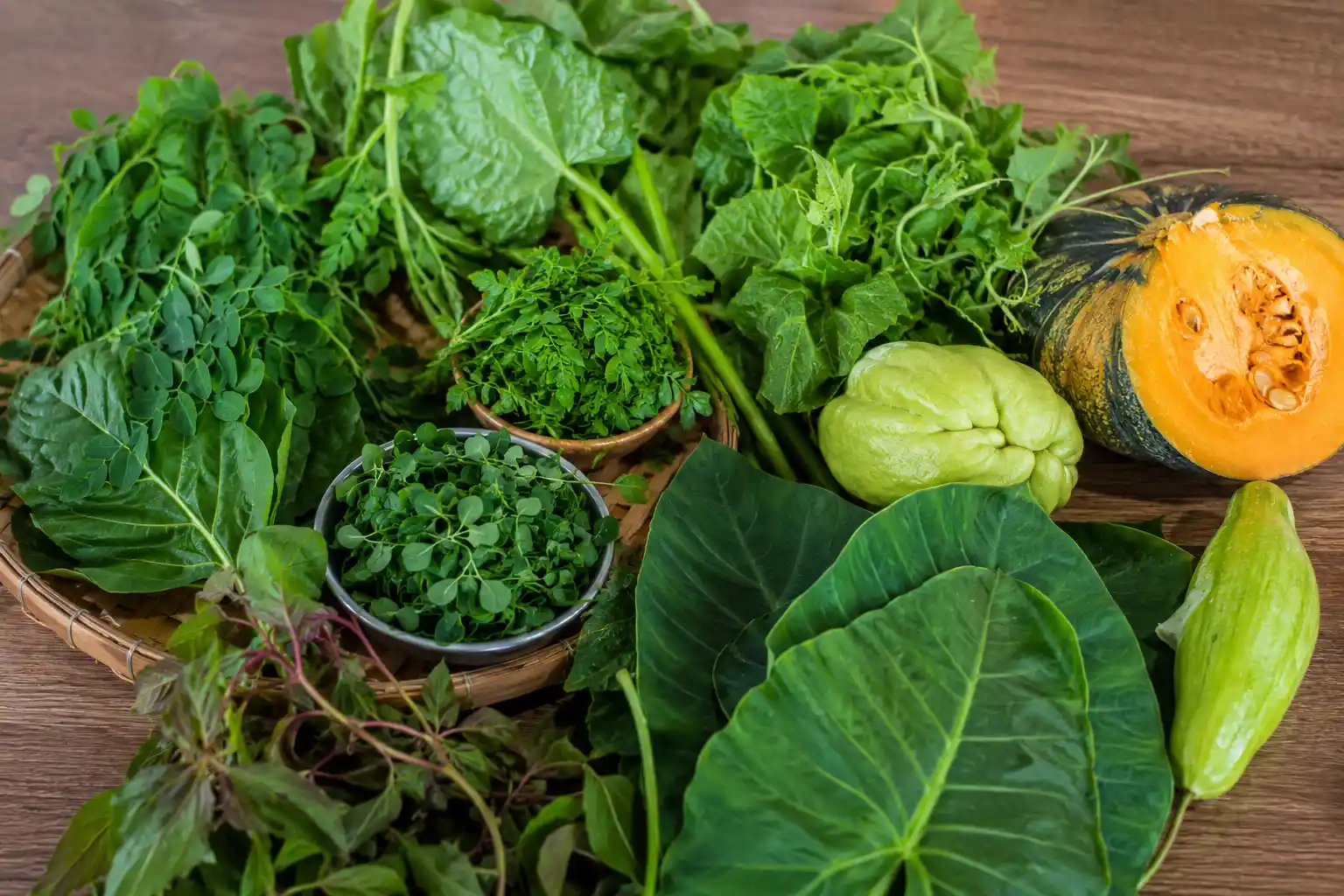
Mauritian cuisine uses a category of greens called brèdes – a collective Creole term covering everything from moringa leaves to taro leaves to pumpkin shoots. These aren’t interchangeable. Each one has its own fibre structure, moisture release, and mucilage content – and get the wrong one and your bouillon turns watery, your stir-fry goes limp, and the dish just doesn’t taste right. The mismatch between Creole terminology and UK supermarket labelling is what trips people up every single time.
What Are Brèdes, Exactly?
Brèdes are the edible leafy greens central to everyday Mauritian cooking — used in bouillons, fricassées, light stews, and stir-fries. They reflect the island’s Creole culinary roots: a layered mix of Indian, African, and Chinese cooking traditions, where each green is chosen not just by appearance but by how it actually behaves in the pot. Common varieties include:
- Brède mouroum — moringa leaves, slightly fibrous, ideal for soups
- Brède songe — taro leaves, earthy and dense, best slow-cooked
- Brède giraumon — pumpkin leaves, mild and tender
- Brède chouchou — chayote shoots, delicate and light
- Brède tomate — jute leaves, the thickener behind authentic bouillon
The Exact UK Equivalents You Need
Brède Tomate — Jute Leaves / Molokhia
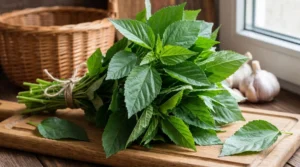
This is one of the most important mauritian brèdes uk cooks need to track down. Brède tomate comes from Corchorus olitorius and is the secret behind that slightly silky, thickened texture in traditional Mauritian bouillon. In UK stores, look for it labelled as molokhia, jute leaves, or Egyptian spinach. African grocery stores, Bangladeshi shops, and the frozen sections of Middle Eastern supermarkets are your best bets. Do not swap this for baby spinach — the whole point of brède tomate is its natural mucilage, a thickening compound that gives bouillon its body. Spinach has none of that.
Brède Malbar — Malabar Spinach
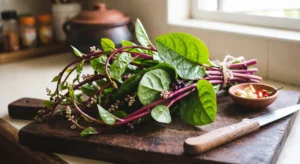
Scientific name: Basella alba. In UK stores it’s labelled as Malabar spinach, Ceylon spinach, or vine spinach — usually found in Indian and Sri Lankan grocery shops. The leaves are thick and fleshy with a slightly slippery texture after cooking, exactly right for stir-fries and light stews where you want a glossy finish rather than a watery result.
Brède Chouchou — Chayote Leaves
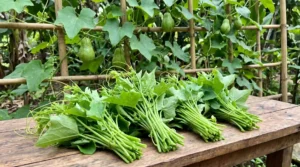
These are the tender vine shoots from the chayote plant, and they’re genuinely hard to find outside a mauritian grocery store uk or Caribbean specialty shop. The flavour is delicate and vegetal — perfect for mild bouillons where you don’t want anything overpowering.
Brède Songe — Taro Leaves
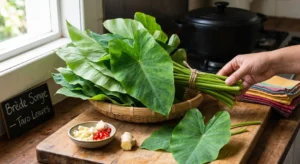
Sold as taro leaves in most Asian supermarkets, either fresh or frozen. Important note: these must be properly boiled before eating to neutralise naturally occurring compounds. They’re earthy and rich, best suited to slow-cooked rustic stews — a staple of traditional mauritian ingredients uk home cooking.
Why Baby Spinach Ruins Mauritian Bouillon
This deserves its own section because it comes up constantly in diaspora cooking communities. Baby spinach has thin cell walls that collapse almost immediately in heat, releasing a flood of water that dilutes the broth rather than enriching it. And crucially, it produces zero mucilage — so the soup ends up thin, flat, and texturally wrong.
The feedback from mauritian greens uk home cooks is consistent across forums and community groups:
- “Turns watery”
- “No body in the soup”
- “Texture feels completely wrong”
- “Doesn’t taste like Mauritius”
These aren’t exaggerations. The structural difference between baby spinach and traditional brèdes like brède tomate or brède mouroum is significant enough to fundamentally change the dish. If your bouillon isn’t coming out right and you’re using UK supermarket spinach, that’s likely the problem.
The Bathua Debate — Which Brède Works Best for Saag?
Bathua (Chenopodium album) is the leafy green at the heart of traditional North Indian saag — earthy, slightly nutty, breaks down beautifully in slow cooking. It’s also barely available in the UK, mostly found in Punjabi grocery stores during winter months, if at all. So which mauritian vegetables uk options come closest?
| Green | Texture | Best for |
|---|---|---|
| Brède Malbar | Soft, slightly slippery | Closest body and mouthfeel in blended saag |
| Mustard greens | Fibrous, bitter | Adds depth and structure |
| Amaranth greens | Tender, mild | Works but can go too soft if overcooked |
| Baby spinach | Watery, thin | Produces flat, weak consistency |
The consensus from diaspora kitchens is clear: don’t rely on a single substitute. A mix of brède malbar and mustard greens delivers a far more authentic saag base than any single UK supermarket green on its own.
Where to Actually Buy Mauritian Greens in the UK
Mainstream supermarkets aren’t the answer. Here’s where mauritian vegetables online uk and in-person sourcing actually works:
- Mauritian specialty stores — Online suppliers like Mauritian Foods Online stock frozen brèdes and imported ingredients that ethnic grocery stores simply don’t carry. For the diaspora, these are often the most reliable source of authentic mauritian fruits and vegetables uk.
- UK Asian supermarkets — Your best high street option, but you need the right terminology. Ask for molokhia, Malabar spinach, taro leaves, or chayote leaves — the Creole names won’t land, but these will.
- African and Caribbean grocers — Particularly useful for brède tomate / molokhia sourced through East African or Caribbean supply chains.
Frozen over fresh — Winter to early spring brings better availability, but frozen brèdes are often more consistent year-round since they’re frozen close to harvest and travel better through long supply chains.
Quick Checklist — How to Avoid Buying the Wrong Thing
Before you grab something off the shelf, run through these:
- Look for Creole names — brède, malbar, songe, mouroum. “Spinach” or “mixed greens” is a red flag.
- Check the stem — Traditional Mauritian brèdes have visible, firm stems. Baby spinach has almost none.
- Feel the surface — Authentic brèdes like Malabar spinach have a natural glossy or fleshy texture. Dry, paper-thin leaves are usually a substitute.
- Watch for mucilage — If your recipe needs that silky bouillon texture, you need a green that releases natural thickening compounds. Baby spinach doesn’t.
Check country of origin — Greens imported from India, Sri Lanka, Bangladesh, or East Africa are far more likely to match authentic mauritian vegetables than UK-grown varieties.
A Few Fruits and Vegetables Worth Knowing Too
Mauritian fruits and vegetables london shoppers sometimes struggle to locate include patisson (a mild white squash), bilimbi (tangy fruit used in curries and chutneys), breadfruit (roasted or boiled as a filling side), and calabash (light and absorbent in soups). Long beans and Mauritian cucumber round things out for stir-fries and fresh salads. Most come through specialist ethnic grocery channels, and items like breadfruit and calabash are usually easier to find frozen than fresh.
Conclusion
Authentic Mauritian cooking depends on botanical accuracy, not visual similarity. In mauritian vegetables uk shopping, even small substitutions can change the final dish in noticeable ways.
A single wrong ingredient can affect:
- Texture of the dish
- Flavour balance
- Broth consistency
- Cooking time and breakdown
This is why identifying the correct mauritian greens uk and understanding their UK or Asian equivalents is essential before cooking traditional recipes.
Real authenticity comes from learning the correct Creole names and sourcing from specialist suppliers rather than relying on generic supermarket labels. Trusted options like Mauritian Food Online UK make it easier to access proper mauritian ingredients uk, especially for diaspora households trying to recreate island-style cooking.
In the end, accurate ingredients are what preserve the true taste of Mauritian home food.
Faqs
1. Why are authentic Mauritian vegetables hard to find in the UK?
Authentic mauritian vegetables uk are difficult to find because most brèdes like mouroum and songe require tropical growing conditions that the UK climate cannot support at scale, making them dependent on imports or specialist ethnic grocers.
2. Are Mauritian vegetables grown locally in the UK?
Nearly all mauritian greens uk are imported from countries such as India, Sri Lanka, Kenya, or Mauritius, as UK agriculture does not support consistent cultivation of tropical leafy greens used in Mauritian cuisine.
3. Does the UK climate affect Mauritian vegetable quality?
Yes. Limited greenhouse cultivation and long supply chains reduce freshness and texture quality. As a result, mauritian ingredients uk are often preferred in frozen or imported form to preserve cooking performance.
4. Why do Mauritian vegetables taste different outside Mauritius?
Differences in soil composition, humidity, and harvest-to-cooking time affect flavour intensity. In Mauritius, greens are cooked within hours of harvesting, while UK imports may be stored or transported for days.
5. Where can I buy authentic Mauritian vegetables in the UK?
Most mauritian vegetables uk are available through Asian supermarkets, African grocers, and online suppliers. A commonly used source in diaspora communities is Mauritian Food Online UK, which provides frozen brèdes and imported ingredients.
6. Are frozen Mauritian vegetables better than fresh ones in the UK?
In many cases, frozen mauritian greens uk preserve mucilage, texture, and cooking behaviour better than supermarket fresh substitutes because they are frozen shortly after harvest.
7. Why don’t UK supermarkets stock Mauritian vegetables?
Mainstream UK retailers avoid low-volume tropical imports due to limited demand and supply complexity, making mauritian vegetables uk primarily available through ethnic and specialist grocery channels.
8. Can UK greens replace Mauritian vegetables in recipes?
Substitutions are possible but not identical. UK greens often lack the fibre structure, bitterness balance, and water-release properties required for authentic Mauritian dishes like bouillon and fricassée.
9. How do Mauritian home cooks in the UK manage ingredient shortages?
Most rely on Asian and African supermarkets or online suppliers like Mauritian Food Online UK, often freezing bulk purchases when imported mauritian ingredients uk become available.


